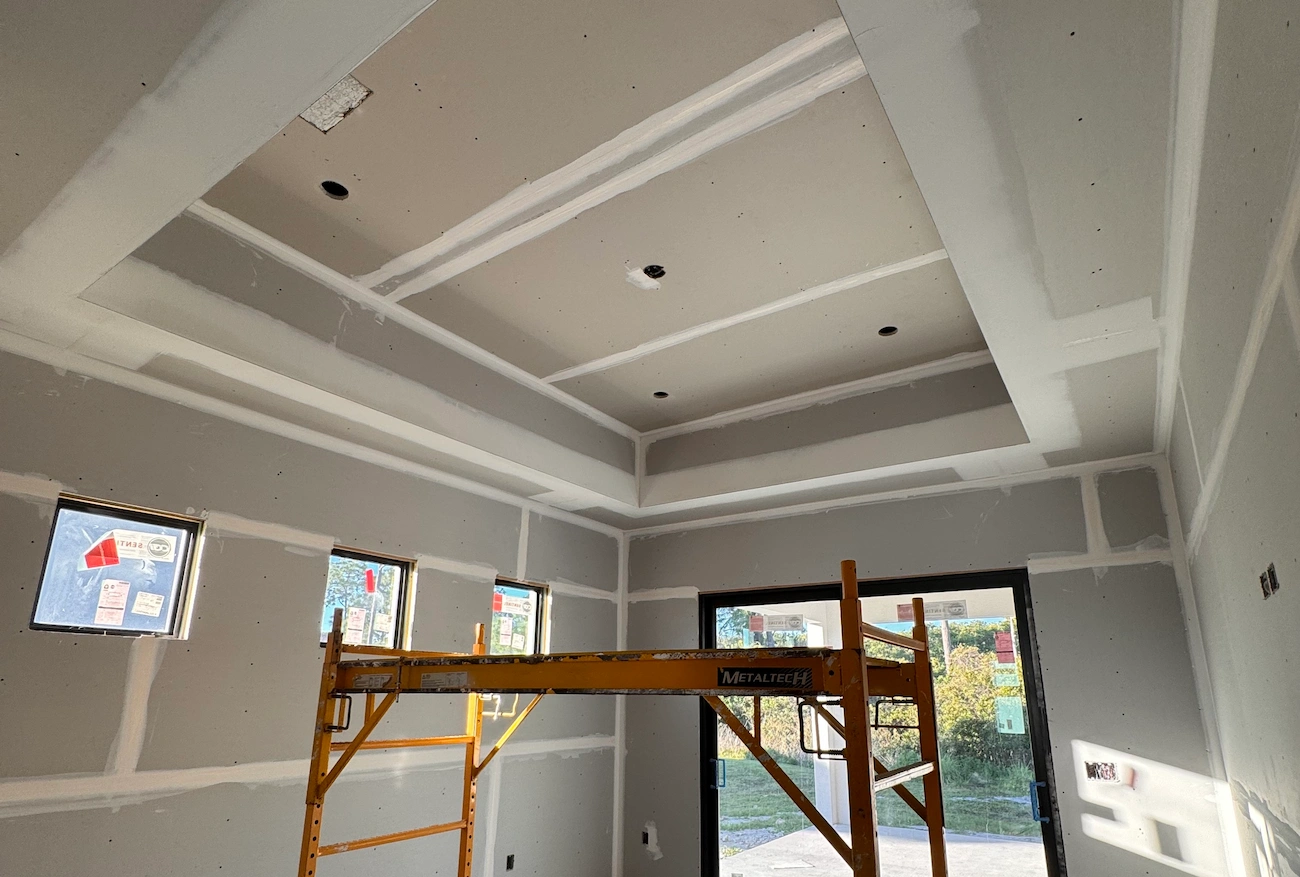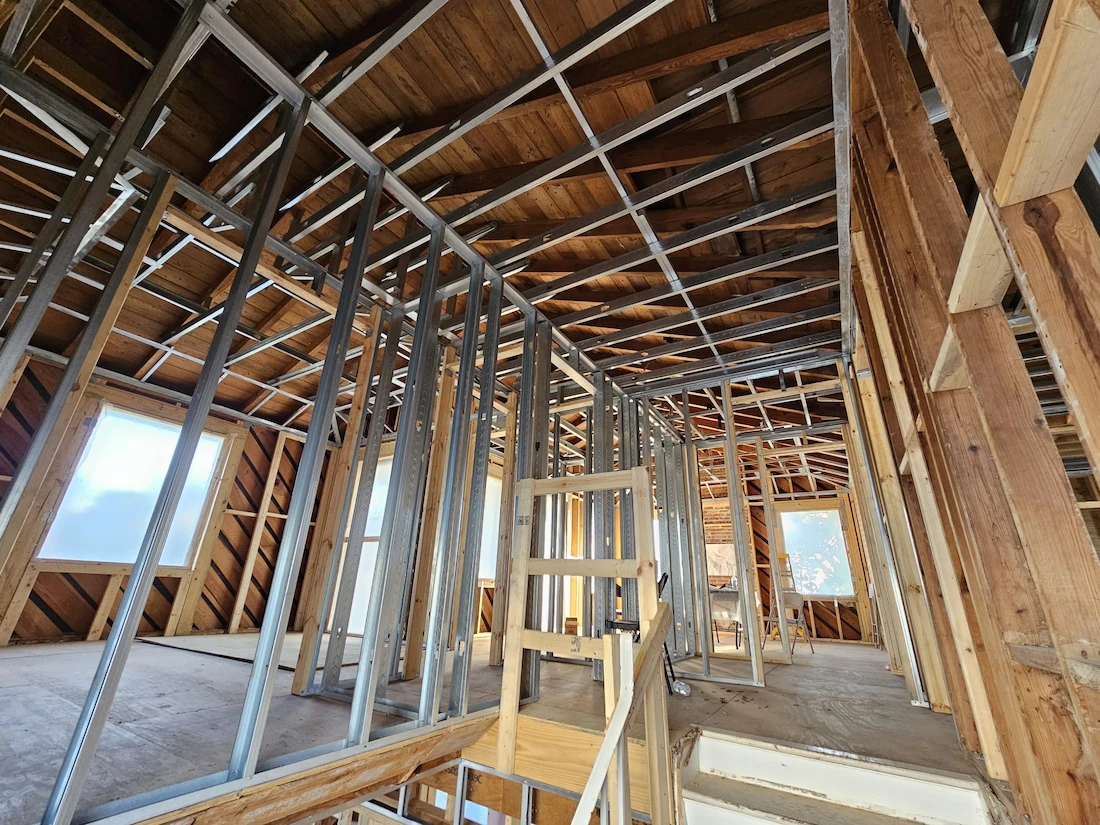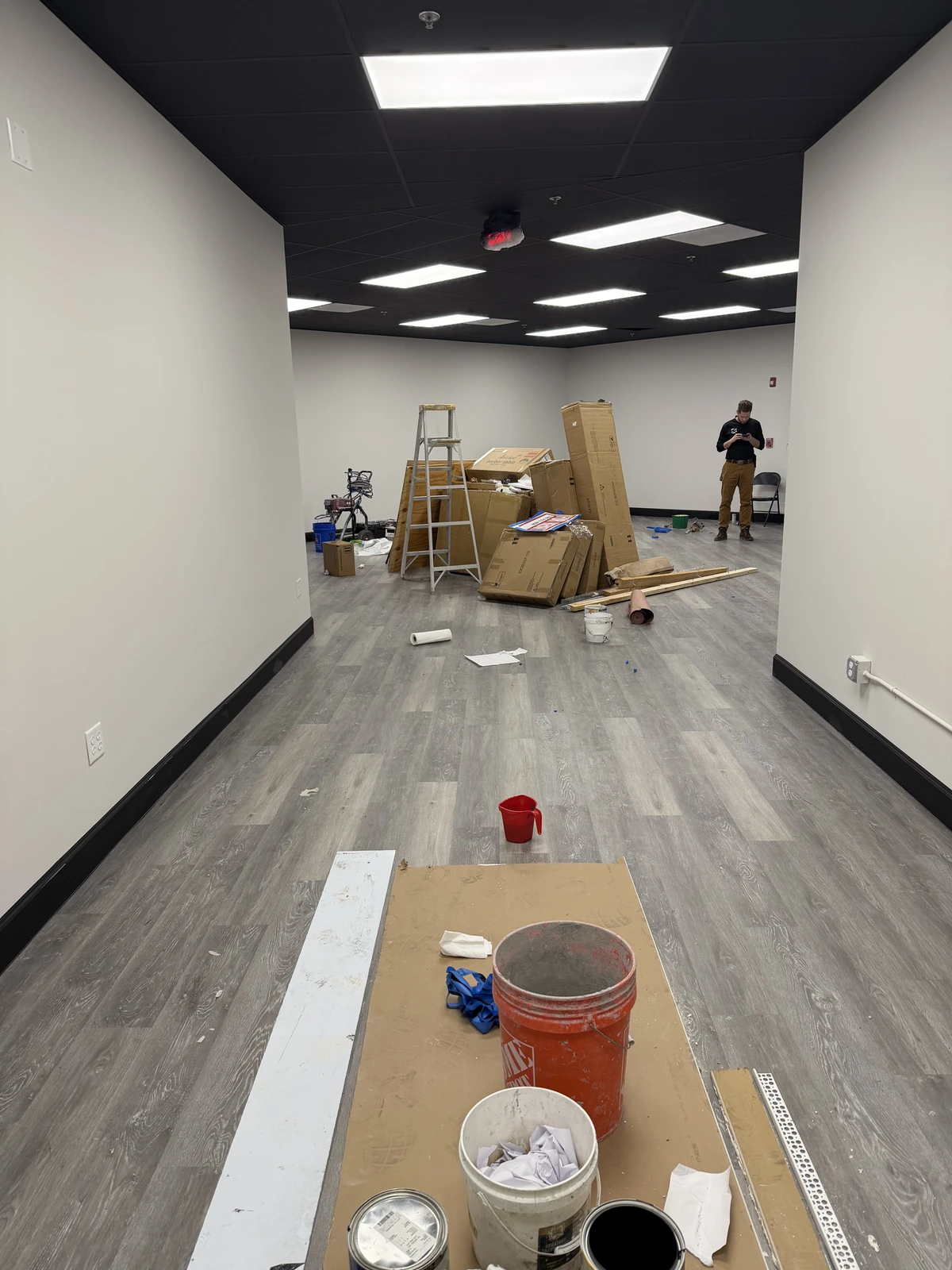
A tenant build out contractor works under a constraint no residential builder ever faces: the building is not yours, the timeline is attached to a lease you have already signed, and a third party — the landlord — holds opinions about most of it. That changes the job well before anyone picks up a tool. Nakamura Contractors delivers tenant improvements and commercial fit-outs across the Treasure Coast and South Florida under Florida license CBC-1268079, with the full range of work set out on our Services page. What follows is the part that trips up first-time tenants.
What Sits Inside a Tenant Build Out Contractor’s Scope
Our commercial scope covers tenant interior fit-outs, structural framing and drywall, flooring and finishes, custom commercial millwork, interior painting, and full layout reconfiguration. That list matters less as a menu than as a boundary: every one of those trades runs through the same in-house team, from permits to punch-list.
The alternative — a tenant assembling trades directly, or a contractor subletting coordination to whoever is available — is where a build-out quietly stops being a fixed scope. Someone has to hold the sequence, because in a fit-out the trades are stacked into a small footprint with no slack between them. Commercial work is roughly 30% of what we do, across 500+ completed projects in 14+ years, and the shape of that experience is what a build-out actually buys.
Where the Landlord’s Work Ends and Yours Begins
This is the single most common source of surprise cost, and it is settled on paper long before it is settled on site. The lease defines what the landlord delivers and what the tenant is responsible for, and those two scopes rarely meet as cleanly as either party assumes. Demising walls, electrical service capacity, HVAC distribution, restroom compliance, fire protection — each one belongs to somebody, and “somebody” is a document, not a conversation.
Our practical advice is unglamorous: settle the demarcation in writing before construction pricing is finalized, not after. A number priced against an assumption about base building work is not a number, it is an estimate waiting to be revised. Bring us the lease language along with the space and we will price what is genuinely yours to build.
A Cold Shell and a Second-Generation Space Are Different Jobs
An empty shell and a space the last tenant walked out of look similar in a listing photo and behave nothing alike. A shell is additive — you are installing systems into a blank volume, and the schedule runs forward in a straightforward order. A second-generation space is subtractive first: demolition, discovery of what is actually behind the drywall, and decisions about what existing work can be kept without inheriting someone else’s shortcuts.
Our commercial work covers both ground-up new construction and strategic remodeling of existing spaces, which is the reason we ask which one you have before quoting a timeline. Full layout reconfiguration on an occupied-then-vacated floor plate carries risk a shell simply does not, and pretending otherwise at the pricing stage only moves that risk onto the tenant.
Who Is Actually On Your Site Matters More in a Leased Building
In a residential remodel, an untidy crew is an annoyance. In a leased commercial building it is a relationship problem with your landlord, your property manager, and the businesses operating on the other side of the wall while you build.
Every subcontractor we bring onto a project must be licensed and insured, across electrical, plumbing, drywall, flooring, custom cabinets, countertops and glass. The standards we hold them to are deliberately practical: job-site cleanliness, clear communication, on-time delivery, and high-quality workmanship. Those are not marketing words in a fit-out — they are the difference between a build-out that ends with a certificate of occupancy and one that ends with a letter from the property manager.
Hiring a Tenant Build Out Contractor on the Treasure Coast
One division of labor is worth stating plainly before anything else: permits pulled, every municipal inspection coordinated, certificate of occupancy delivered. The building department is our job, not yours. Rent runs from lease commencement whether or not the space is finished, so every trade is scheduled around your opening date rather than the convenience of the contractor. Completed commercial work, including the Barberhood Chambers build-out, sits on our Portfolio.
Bring three things to the first conversation and the rest follows quickly: the space, the lease language describing landlord versus tenant scope, and the date you need to open. From there we work backwards through permits, lead times and trade sequencing, with one in-house team running the build from permits to punch-list and the keys handed over ready to open. We serve Stuart, West Palm Beach, Boynton Beach and Delray Beach among other communities across Palm Beach, Martin and St. Lucie counties, all under license CBC-1268079 with Nakamura as contractor of record. Estimates are free — call (772) 278-1667, email contact@nakamuracontractors.com, or reach us through our Contact page. A tenant build out contractor earns the fee in the weeks before demolition starts, not after — so start the conversation early.
Frequently Asked Questions
What does a tenant build out contractor actually do?
Converts a leased commercial space into a business that can open. Our scope covers tenant interior fit-outs, structural framing and drywall, flooring and finishes, custom commercial millwork, interior painting, and full layout reconfiguration — all coordinated by one in-house team from permits through punch-list, under Florida license CBC-1268079.
How do I know which work is the landlord’s responsibility?
The lease defines it, not the job site. Demising walls, electrical capacity, HVAC distribution, restroom compliance and fire protection each belong to one party or the other, and the split varies by agreement. Settle that demarcation in writing before construction pricing is finalized — a price built on an assumption about base building work will be revised later.
Is a second-generation space cheaper than a cold shell?
Not automatically. A shell is additive work in a predictable sequence. A previously occupied space starts with demolition and discovery, and what is behind the existing drywall decides the rest. We handle both ground-up construction and strategic remodeling of existing spaces, which is why we ask which one you have before committing to a timeline.
Who handles permits and the certificate of occupancy?
We do. Permits pulled, every municipal inspection coordinated, and the certificate of occupancy delivered — the building department is our job, not yours. We work across Palm Beach, Martin and St. Lucie counties, with drawings that account for code from the permit set forward.
Are your subcontractors licensed and insured?
Yes, without exception, across electrical, plumbing, drywall, flooring, custom cabinets, countertops and glass. We hold them to job-site cleanliness, clear communication, on-time delivery and high-quality workmanship — standards that matter more in a leased building, where your neighbors and your property manager are watching the build.